There aren't two gardens in the world exactly the same. Why should there be two roof gardens the same?
A Natira roof is not installed. It is commissioned. It is designed for one building — its exposure, its outlook, the ground it stands on — and grown to order, plant by plant, at our nursery on the shore of Larne Lough in Ireland.
Natira is a small practice. We intend to stay one. We take on a limited number of roofs, and every one gets our complete attention.
If you have a roof in mind, send us the drawing. What comes back is a proposal composed for that roof alone.
I'm Ray Hanvey. I've been growing living roofs commercially for sixteen years, and I was the first person to make it work on the island of Ireland.
Natira works from the shore of Larne Lough on the Antrim coast of Ireland. Everything we put on a roof starts here — as seed from our own seed bank or a certified supplier, sown on a bench and grown on a fifty-two week schedule before it ever travels to a roof in England, Ireland or anywhere between.
Nothing is bought in as a mystery mix. Nothing is wild-collected.
We are a small practice and that is the point. We compose one roof at a time, for the architect, contractor or homeowner who wants the roof to belong to the building — and we would rather do fewer roofs properly than many roofs approximately.
Every plant we grow is a native of these islands, of known and named species, chosen for thin, dry, wind-scoured ground — because that is what a roof is. Our nursery sits in the Atlantic weather: if a plant thrives on a bench above Larne Lough, it will thrive on a roof. When we say the planting will live happily at 100mm with no irrigation, it's because it is doing exactly that on our own benches now.
You're putting a garden somewhere you would never expect to see one. It's a very special thing. We understand that. The magic of it still gives me so much energy, sixteen years in.
Most people come to green roofs through one word: sedum. It is a good plant and a sensible place to start. Composed ecology goes further.
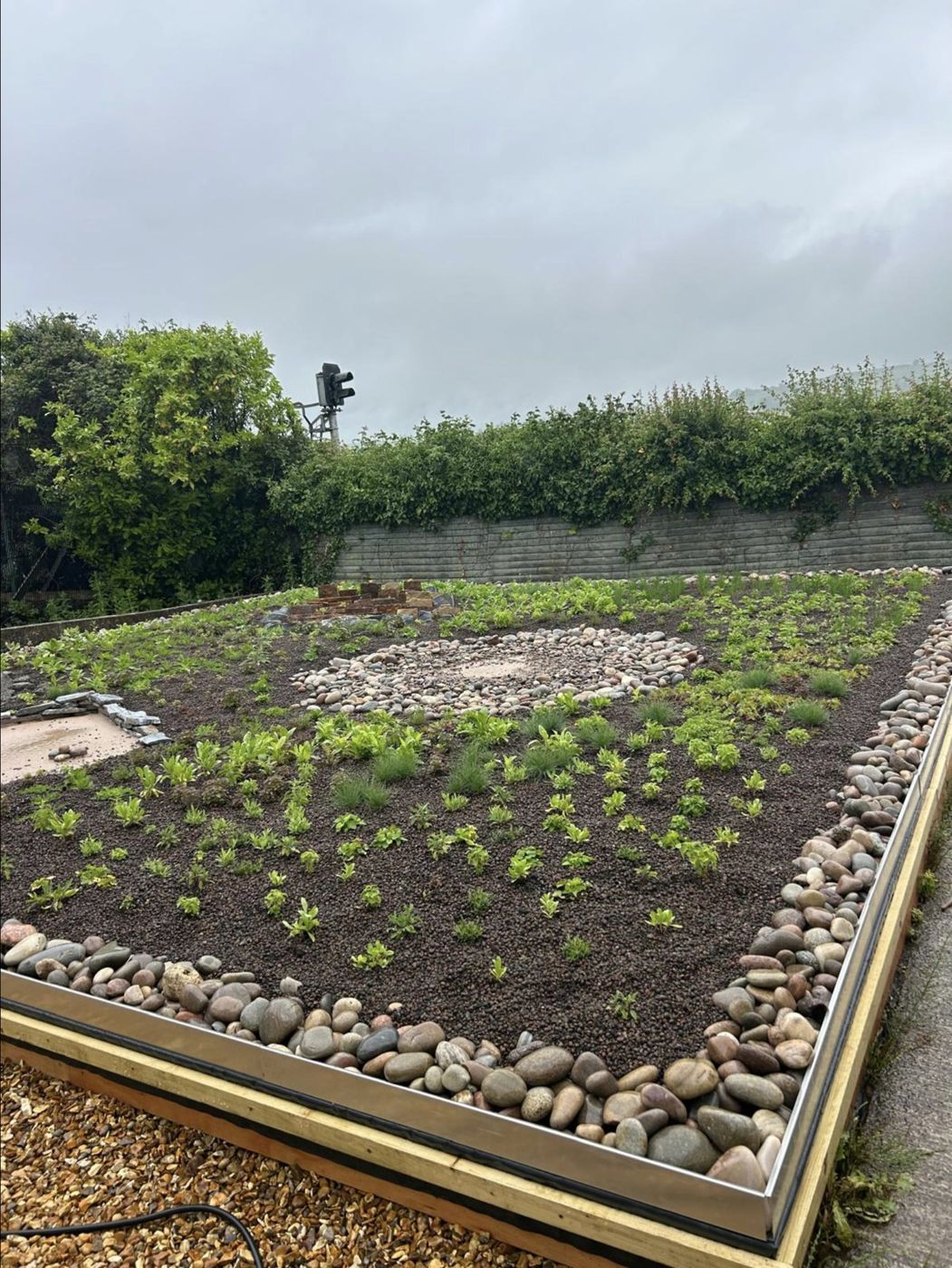
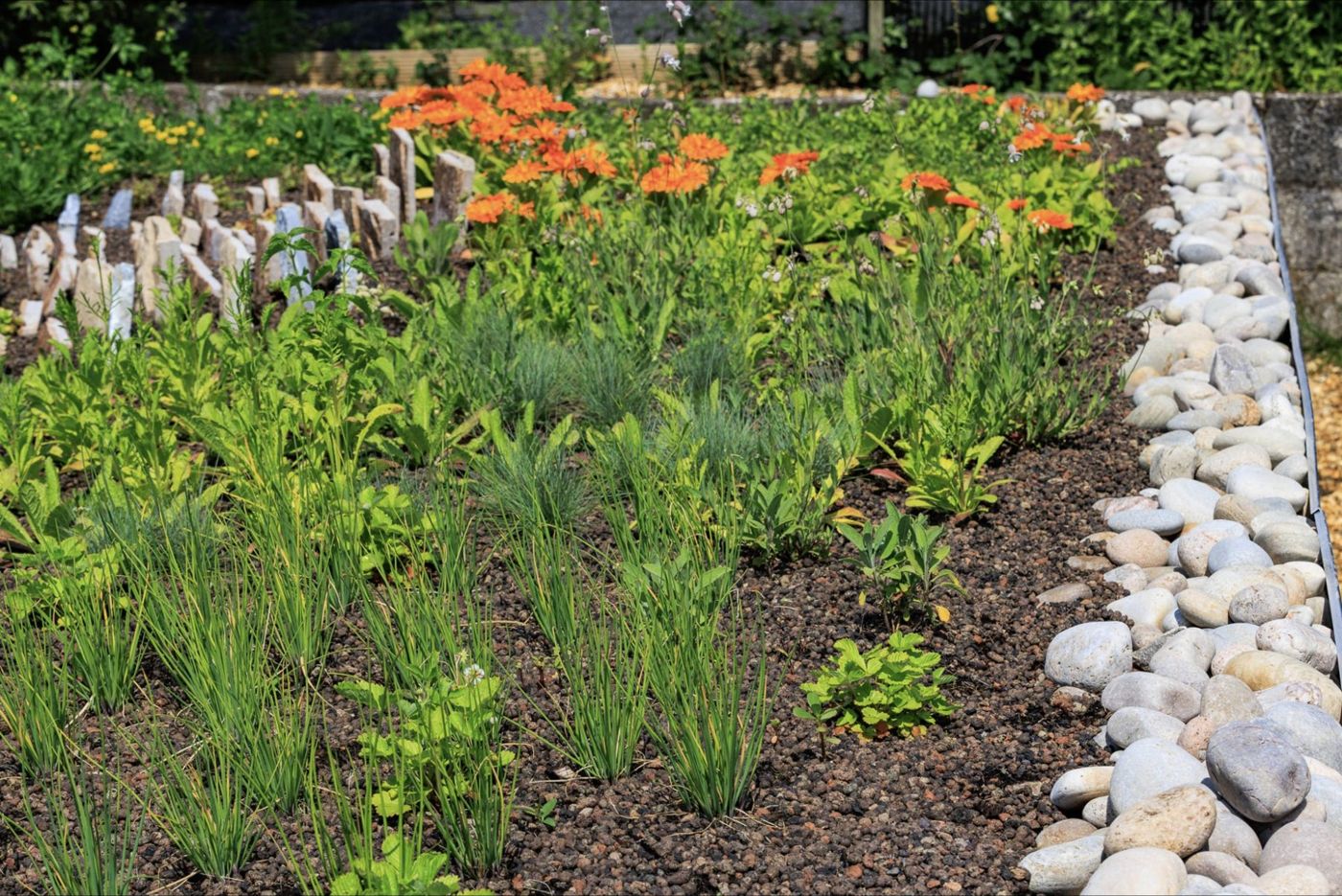
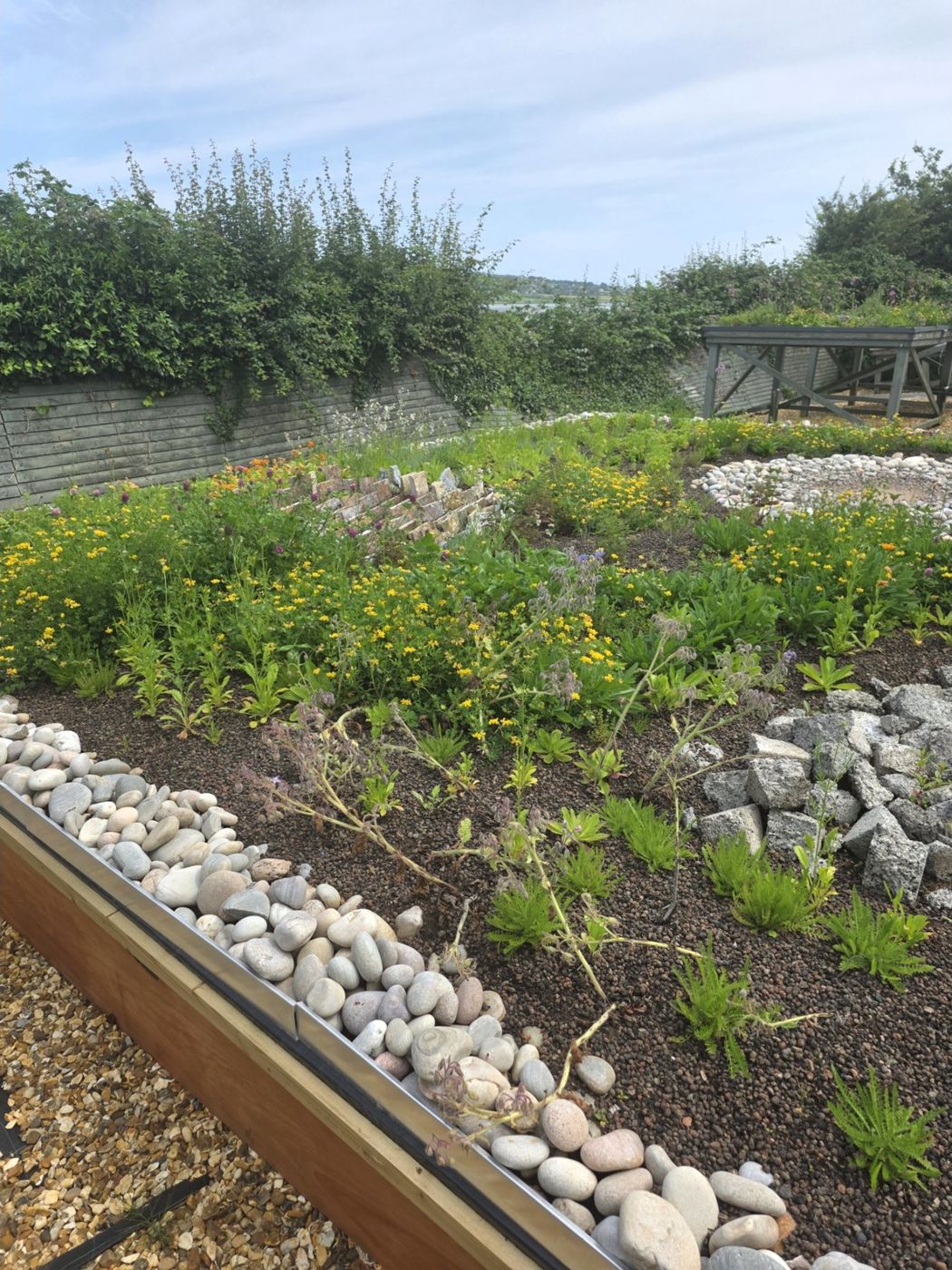
A composed roof is planned the way a good garden or a piece of music is planned: every part chosen for its place and its moment, and all of it working together. Everything on this page comes from roofs we have planted and watched grow, including our display roof at Larne Lough, planted in May 2026 and followed through its first summer.
Download this guide as a PDF 12 pages, for you or your builder
The planting palette comes from the ground the building stands on. Basalt grassland on the Antrim coast and machair on a Donegal shore suggest two different roofs.
Plants that share the same depth, light and moisture are grouped together, the way they would grow in the wild. Each group feeds a different part of the roof's wildlife.
The plan is set so something is in flower from early spring into autumn, with seed heads left standing through winter for birds and insects.
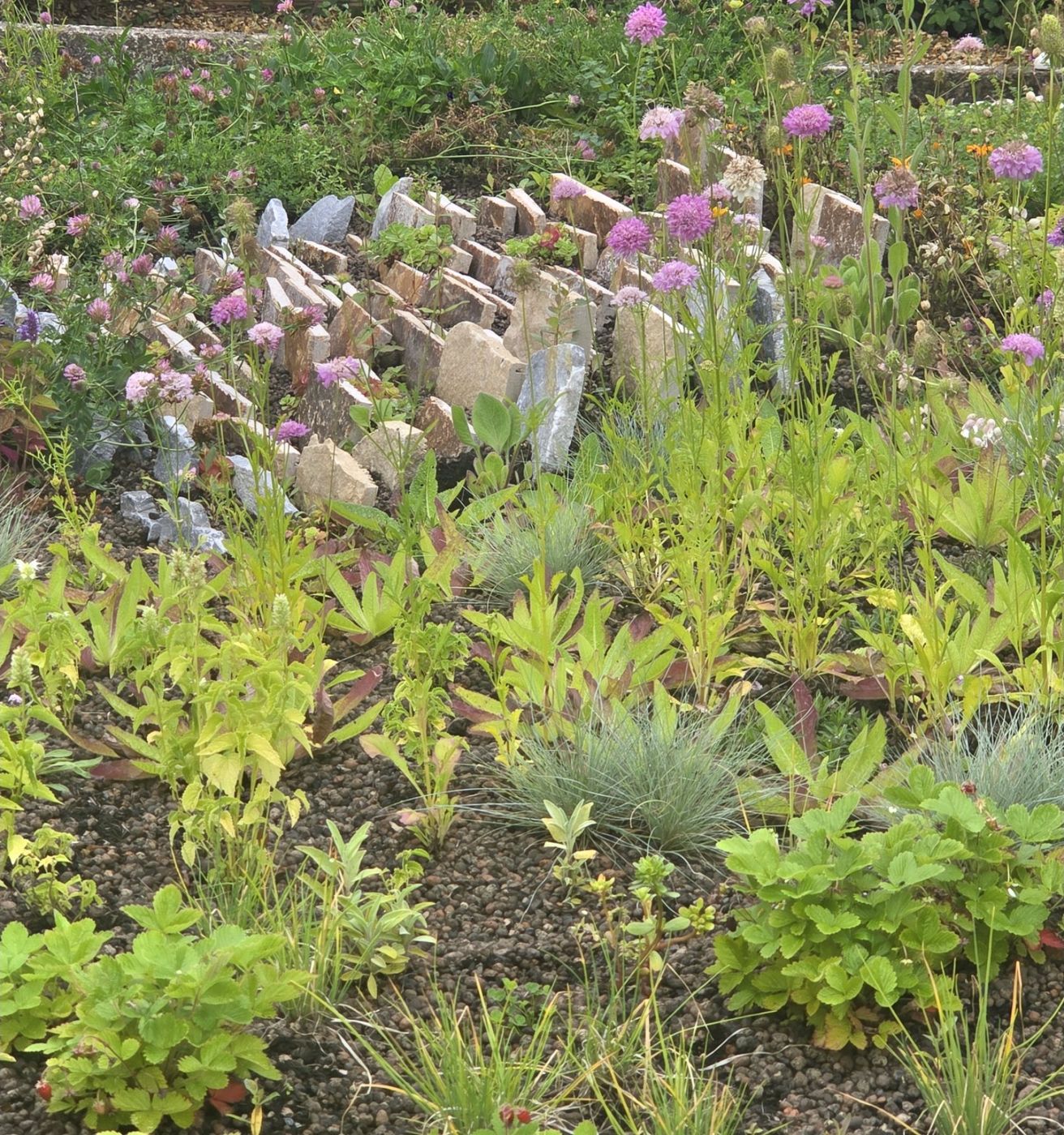
Stone, sand and rubble are shaped into features that give insects places to nest, shelter, bask and drink.
Every plant is marked as a native or a garden guest, so you know exactly what is on your roof and why it is there.
The layers underneath are the same. What arrives on the lorry is not.
Pre-grown blanket. Sedum blanket is grown in a nursery for a year or more on a mat, then cut, rolled and delivered like turf. The roof is fully covered on the day of installation. It is the most common green roof in Britain and Ireland, and we grow a great deal of it ourselves. It arrives finished, and its care goes into keeping it that way: a feed each spring and one or two maintenance visits a year are typical.
Plug planting. Plugs are young plants grown individually, each with its own root ball, and planted by hand into the substrate, around 25 to every square metre, following a plan drawn for the roof. Because each plant is placed one at a time, the roof can hold a far wider mix: wildflowers, herbs, grasses, coastal plants, and sedums too. It arrives young, and its care goes into the first year while it grows in. This is how every composed roof is planted.


A planted roof begins at its smallest. Everything after that is growth. It takes a full season to knit and a second to come into its own. From the third year it settles and seeds itself into its own gaps. Some plants move around. That is the roof working.
These are the six groups on the roof in the photographs. Some follow a wild plant community closely. Others, such as the Kitchen Garden and the Night Garden, are built around a purpose. On a commissioned roof the groups are drawn from the vocabulary above and from your own landscape.
* Garden guest: a plant from outside Britain and Ireland, chosen for its flowers, its scent or its use in the kitchen. Sedum has a place here too: we grow Sedum album, reflexum and anglicum as plugs for the driest parts of a roof and the gaps between stones.
Plants feed wildlife. Habitat features give it somewhere to live. Each one is built from natural stone, sand or rubble and planted around its edges.
If you look at the roof and think it might need water, it does. Water it.
That is the only watering rule we give. The system goes down in a day: drainage board, substrate, the plants set out by colour-coded box to the plan, a dressing of LECA, and a deep soak in. No specialist trade, no machinery. After that, most of the work comes early.
Swipe the drawing to see every layer.
Section through a Natira roof, around 100mm to 125mm deep in total. Not to scale.
Weight. Our substrate weighs about 10kg per square metre for every 10mm of depth when fully soaked. At 100mm, the deepest we lay, that is around 100kg per square metre, plus about 20kg once the plants are established. The deepest parts of our display roof are 100mm, and thriving. Substrates vary, so ask any supplier for the saturated weight of theirs, and have your engineer confirm your roof can carry the load.
Ask for a figure in kilograms per square metre, fully soaked. Your engineer needs it, and it tells you what can grow.
Ask to see photographs of a roof they supplied, taken a few years after installation as well as on the day it went on.
A named list tells you what will flower, when, and what it will feed.
Ask how often it needs feeding, weeding or watering, and whether that is something you will do or a visit you will pay for.
Plants grown in a similar climate to yours settle faster and last longer.
Keep the outlets clear, give it one late-winter cut, and it will thicken rather than thin. The drifts will shift a little from year to year. That is the roof working. A composed ecology is meant to move.
That is genuinely all we need to begin — a drawing, a photograph, or even the address and a rough size.
What comes back is a proposal composed for your roof alone: the palette drawn from your ground, the planting plan, the specification, the flowering year, and an honest account of what the roof will ask of you.
We would rather you judged it for yourself.
Architects sometimes prefer to see the plants before they commission. Larne is a short flight from anywhere in England, and a day at the nursery — walking the trays, standing on the display roof, lunch by the water — is the best introduction. Write and we will arrange it.